

From product renders to visual effects, bringing 3D into the bigger picture.
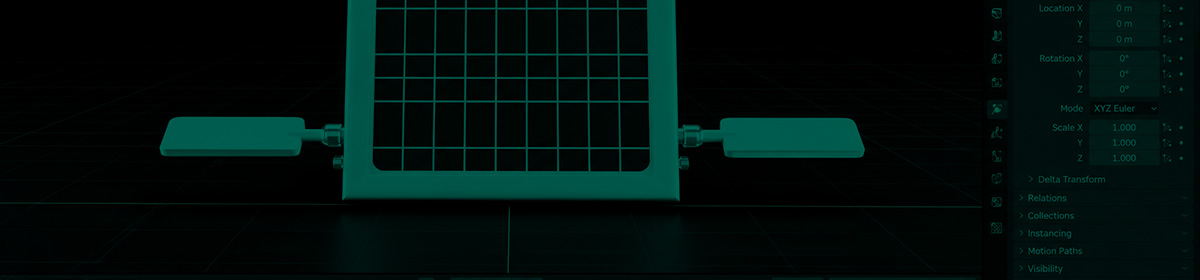
I’ve worked with several 3D applications throughout my career, but Blender has become an important part of my creative workflow, both independently and professionally at several companies.
Coming from years of experience with Cinema 4D, Maya, and 3ds Max, I was already familiar with the fundamentals of 3D production. Blender gave me another powerful set of tools for modeling, materials, lighting, animation, rendering, and bringing ideas into three dimensions.
I’ve used Blender professionally to create 3D product visualizations and renders, building scenes, setting up materials and lighting, and producing polished imagery that helps products look their best. I enjoy the challenge of making something feel realistic, visually interesting, and ready for use in advertising or marketing.
Blender has also become a valuable part of my After Effects workflow. I’ve used it to create and render 3D elements for motion graphics, compositing, and visual effects, combining the flexibility of a full 3D application with the creative possibilities of 2D animation and post-production.
As a 3D generalist, I enjoy being able to move between different parts of the production process, whether that’s creating an object, experimenting with lighting, setting up a camera, or refining the final composite.
For me, Blender is another example of how the tools may change, but the creative process stays familiar.
And there’s always something new to learn, build, or render.